 Image 1 of 1
Composite Decking
Composite Deck
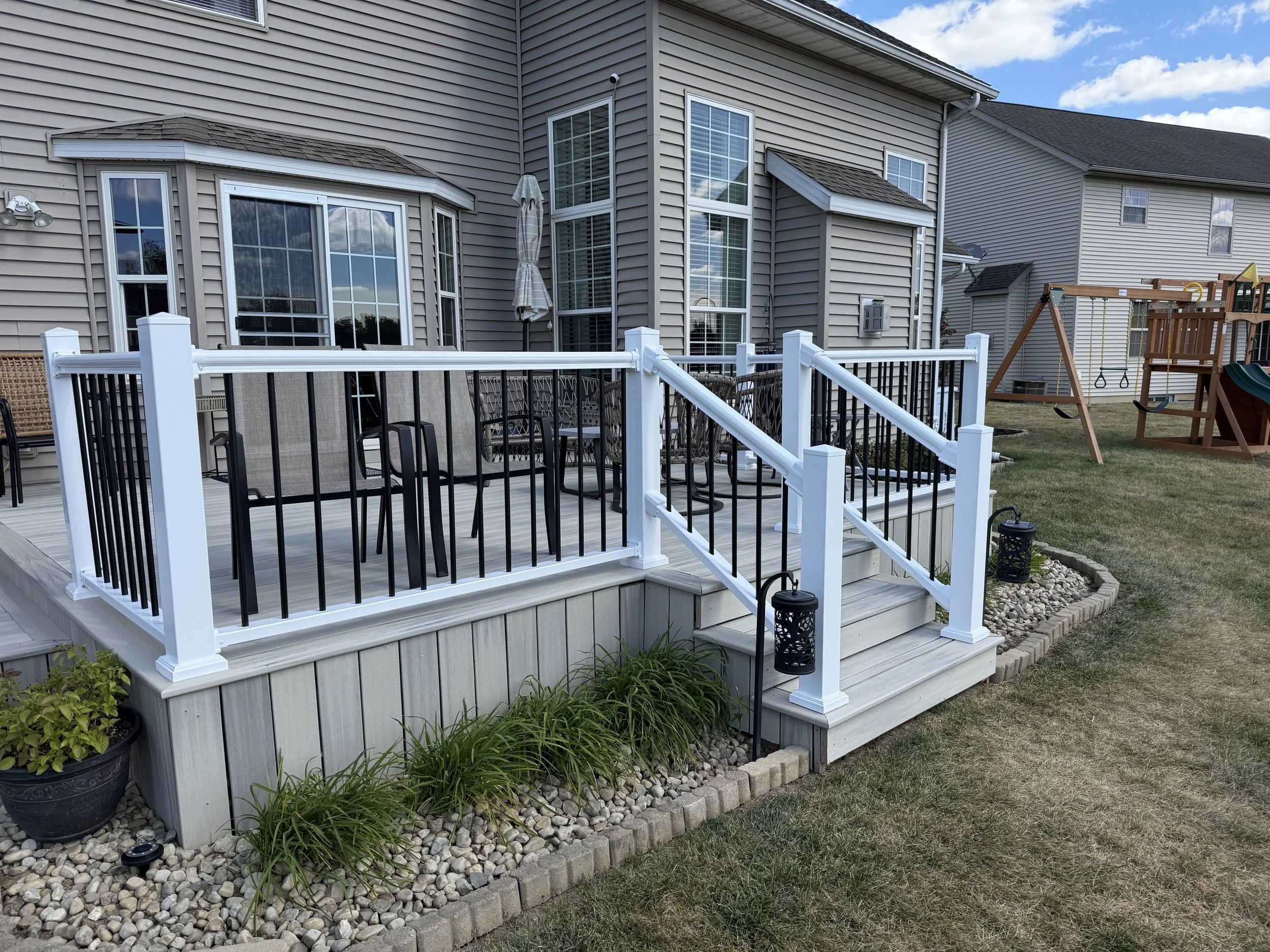
Composite decking combines wood fibers and recycled plastics to create a durable, low-maintenance decking surface that looks like wood without many of the drawbacks. It's a popular choice for homeowners who want the appearance of natural wood but with greater resistance to rot, insects, staining, and fading.
Key benefits
Low maintenance: No sanding, staining, or sealing required. Routine cleaning with soap and water or a mild cleaner keeps the deck looking good.
Durability: Resistant to rot, mold, and insect damage. Many manufacturers offer multi-year warranties against structural failure and fading.
Long lifespan: Properly installed composite decking can last 20–30 years or longer.
Aesthetics: Available in a wide range of colors, grain patterns, and finishes—some boards mimic the look and texture of hardwoods.
Environmental advantage: Many composite boards use recycled plastics and reclaimed wood fiber, reducing demand for virgin lumber.
Slip resistance: Many products include textured surfaces or added grit for safer footing in wet conditions.
Considerations before choosing composite decking
Cost: Higher upfront cost than pressure-treated wood, though lower lifetime maintenance costs often offset the initial investment.
Heat retention: Darker composite colors can become hot in direct sun; choose lighter stains or provide shade where heat is a concern.
Expansion and contraction: Composite boards can expand and contract more than wood; proper spacing and fastening systems are essential.
Scratches and stains: While resistant, composites can scratch and may show stains from oil, grease, or some chemicals. Select products with protective caps if scratch resistance is a priority.
Weight: Composite boards are heavier than wood, which may require sturdier framing or closer joist spacing.
Types of composite decking
Uncapped composite: Composite core without a protective surface layer. Typically less expensive but more susceptible to staining and fading.
Capped/wrapped composite: Composite core with a polymer cap that provides superior stain-, fade-, and scratch-resistance. Often the best value for longevity.
PVC decking: Made entirely of plastic (no wood fiber). Highly resistant to moisture and insects and very low maintenance; color-through options reduce visible scratches.
Hybrid boards: Combine strengths of wood, plastic, and protective caps for balanced performance.
Installation tips
Follow manufacturer spacing and fastener recommendations to allow for thermal movement.
Use hidden fasteners or color-matched screws for a clean finish; stainless steel or coated fasteners prevent corrosion.
Design joist spacing to meet the deck board span rating—composite often requires joists spaced 12"–16" on center (check product specs).
Provide proper ventilation under the deck to avoid trapped moisture.
Leave end gaps and spacing at butt joints per manufacturer guidelines to avoid buckling.
Cut boards with a fine-toothed carbide blade for clean edges; high-speed blades can melt synthetic materials.
Maintenance
Regular sweeping removes debris that can trap moisture and cause staining.
Clean annually or as needed with a composite-safe cleaner and a soft-bristle brush or low-pressure power washer (use manufacturer-recommended pressure settings).
Promptly clean spills (oil, grease, BBQ residue) to reduce staining risk.
Avoid using products with chlorine bleach concentrates or strong solvents unless allowed by the manufacturer.
For scratch or surface damage, some manufacturers provide repair kits or guidance for replacement of affected boards.
Design ideas
Multi-level layouts with integrated planters or seating for functional outdoor living.
Contrasting border boards or picture-frame layouts for a polished look.
Built-in lighting with hidden LED strips or recessed deck lights for safety and ambiance.
Combining composite decking with aluminum or cable railings for modern, low-maintenance systems.
Transition zones using composite for main deck areas and natural wood for stairs or accents when a mixed aesthetic is desired.
Is composite right for your project? Composite decking is an excellent choice if you want a long-lasting, low-maintenance deck that retains a wood-like appearance. It's particularly well-suited for busy households, waterfront properties, or areas where moisture and insects are concerns. If budget is the primary constraint and you’re prepared for ongoing maintenance, treated wood may still be preferable. For most homeowners looking for a balance of appearance and durability, capped composite or PVC decking is a strong option.
Kingdom Construction LLC can help you select the right composite system, design a layout that suits your lifestyle, and install it to manufacturer specifications for lasting performance. Contact us to start building your deck and enjoy outdoor living with confidence.
Composite Deck
Composite decking combines wood fibers and recycled plastics to create a durable, low-maintenance decking surface that looks like wood without many of the drawbacks. It's a popular choice for homeowners who want the appearance of natural wood but with greater resistance to rot, insects, staining, and fading.
Key benefits
Low maintenance: No sanding, staining, or sealing required. Routine cleaning with soap and water or a mild cleaner keeps the deck looking good.
Durability: Resistant to rot, mold, and insect damage. Many manufacturers offer multi-year warranties against structural failure and fading.
Long lifespan: Properly installed composite decking can last 20–30 years or longer.
Aesthetics: Available in a wide range of colors, grain patterns, and finishes—some boards mimic the look and texture of hardwoods.
Environmental advantage: Many composite boards use recycled plastics and reclaimed wood fiber, reducing demand for virgin lumber.
Slip resistance: Many products include textured surfaces or added grit for safer footing in wet conditions.
Considerations before choosing composite decking
Cost: Higher upfront cost than pressure-treated wood, though lower lifetime maintenance costs often offset the initial investment.
Heat retention: Darker composite colors can become hot in direct sun; choose lighter stains or provide shade where heat is a concern.
Expansion and contraction: Composite boards can expand and contract more than wood; proper spacing and fastening systems are essential.
Scratches and stains: While resistant, composites can scratch and may show stains from oil, grease, or some chemicals. Select products with protective caps if scratch resistance is a priority.
Weight: Composite boards are heavier than wood, which may require sturdier framing or closer joist spacing.
Types of composite decking
Uncapped composite: Composite core without a protective surface layer. Typically less expensive but more susceptible to staining and fading.
Capped/wrapped composite: Composite core with a polymer cap that provides superior stain-, fade-, and scratch-resistance. Often the best value for longevity.
PVC decking: Made entirely of plastic (no wood fiber). Highly resistant to moisture and insects and very low maintenance; color-through options reduce visible scratches.
Hybrid boards: Combine strengths of wood, plastic, and protective caps for balanced performance.
Installation tips
Follow manufacturer spacing and fastener recommendations to allow for thermal movement.
Use hidden fasteners or color-matched screws for a clean finish; stainless steel or coated fasteners prevent corrosion.
Design joist spacing to meet the deck board span rating—composite often requires joists spaced 12"–16" on center (check product specs).
Provide proper ventilation under the deck to avoid trapped moisture.
Leave end gaps and spacing at butt joints per manufacturer guidelines to avoid buckling.
Cut boards with a fine-toothed carbide blade for clean edges; high-speed blades can melt synthetic materials.
Maintenance
Regular sweeping removes debris that can trap moisture and cause staining.
Clean annually or as needed with a composite-safe cleaner and a soft-bristle brush or low-pressure power washer (use manufacturer-recommended pressure settings).
Promptly clean spills (oil, grease, BBQ residue) to reduce staining risk.
Avoid using products with chlorine bleach concentrates or strong solvents unless allowed by the manufacturer.
For scratch or surface damage, some manufacturers provide repair kits or guidance for replacement of affected boards.
Design ideas
Multi-level layouts with integrated planters or seating for functional outdoor living.
Contrasting border boards or picture-frame layouts for a polished look.
Built-in lighting with hidden LED strips or recessed deck lights for safety and ambiance.
Combining composite decking with aluminum or cable railings for modern, low-maintenance systems.
Transition zones using composite for main deck areas and natural wood for stairs or accents when a mixed aesthetic is desired.
Is composite right for your project? Composite decking is an excellent choice if you want a long-lasting, low-maintenance deck that retains a wood-like appearance. It's particularly well-suited for busy households, waterfront properties, or areas where moisture and insects are concerns. If budget is the primary constraint and you’re prepared for ongoing maintenance, treated wood may still be preferable. For most homeowners looking for a balance of appearance and durability, capped composite or PVC decking is a strong option.
Kingdom Construction LLC can help you select the right composite system, design a layout that suits your lifestyle, and install it to manufacturer specifications for lasting performance. Contact us to start building your deck and enjoy outdoor living with confidence.